[This essay was originally published in 2020 as a part of “Toolkit for Today,” a doctoral fellowship organized by the Canadian Centre for Architecture. The essay is a part of a longer text that includes two essays by Eliyahu Keller and Jessica Ngan, which you can read here.].
We are, according to some, said to live in the Anthropocene—“the human epoch.”1 Yet the processes that now undermine the ecology and climate we rely on for long-term survival and prosperity are, in a peculiar way, disproportionate when compared to actual individual human lives. No single human being can impede these processes and no individual is solely accountable for them, but we are subject to their effects en masse. One could say, then, that the human epoch is beyond the human scale.
In the 1920s, long before the notion of the Anthropocene was coined, Lewis Mumford (1895–1990) began pondering why collective human ventures so often result in environments hostile to our own wellbeing despite being realized with increasingly efficient technology. One of his early and repeated targets of critique was the skyscraper, since, when built close together with other towers in the gridiron urban plan, it served to maximize profit rather than to increase human wellbeing. Following Aristotle, Mumford argued that the good life must be the overarching goal of architecture and civilization, and to achieve this, questions of scale and proportion were of utmost importance.2 Humans may not be the measure of all things, but Mumford believed that we ought to at least be the measure for the built environments we inhabit.

While in the Western Hemisphere, towns are spread out and isolated, the Eastern Hemisphere is dominated by urban environments that spread into each other. In The Culture of Cities, Mumford echoed Patrick Geddes by calling this phenomenon “conurbation”—nineteenth-century megalopolises that grow together into even larger environments, devouring both communities and ecosystems.

While this “house” is obviously built at an insect scale, created to combat the decline of pollinators and biodiversity, it is nevertheless a human-made artefact modelled after a human form of dwelling. Moreover, though the structure provides shelter for nonhuman dwellers, it contributes to an environment that also benefits human beings, defying the distinction between anthropocentrism and biocentrism.
Biocentrism and ecocentrism may seem like remedies to the Anthropocene, but Mumford would likely have said that we are not anthropocentric enough. His “human” was a living, ecologically enmeshed being, not an abstraction disconnected from the environment. Understanding humans in this way, anthropocentrism makes for a human ecology. Mumford therefore embraced Frank Lloyd Wright’s organic architecture, in which human dwellings were conceived of in relation to their surroundings. Moreover, he saw in Wright’s work an effort to mend the growing gap between art and technology, which he believed was necessary in order for architects to not become servants of the means we create.3 In the end, however, Mumford believed that we had to go beyond individual buildings and cities, for a regional planning in which the ecology was more explicitly accounted for was needed. For humans to prosper, so must the entire web of life.4
Canadian Centre for Architecture
Gift of Pierlucio Pellissier
© CCA
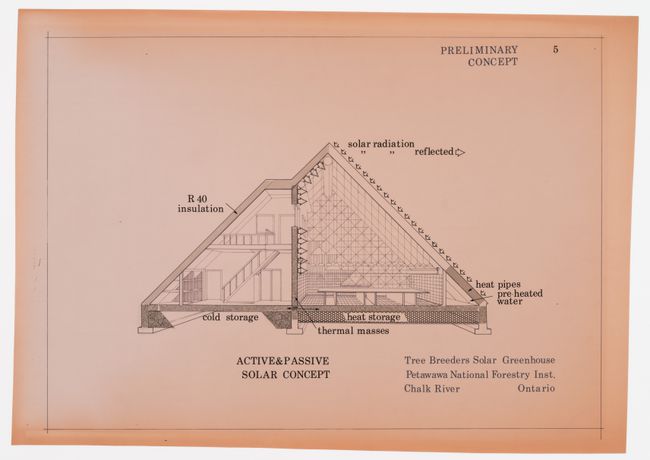
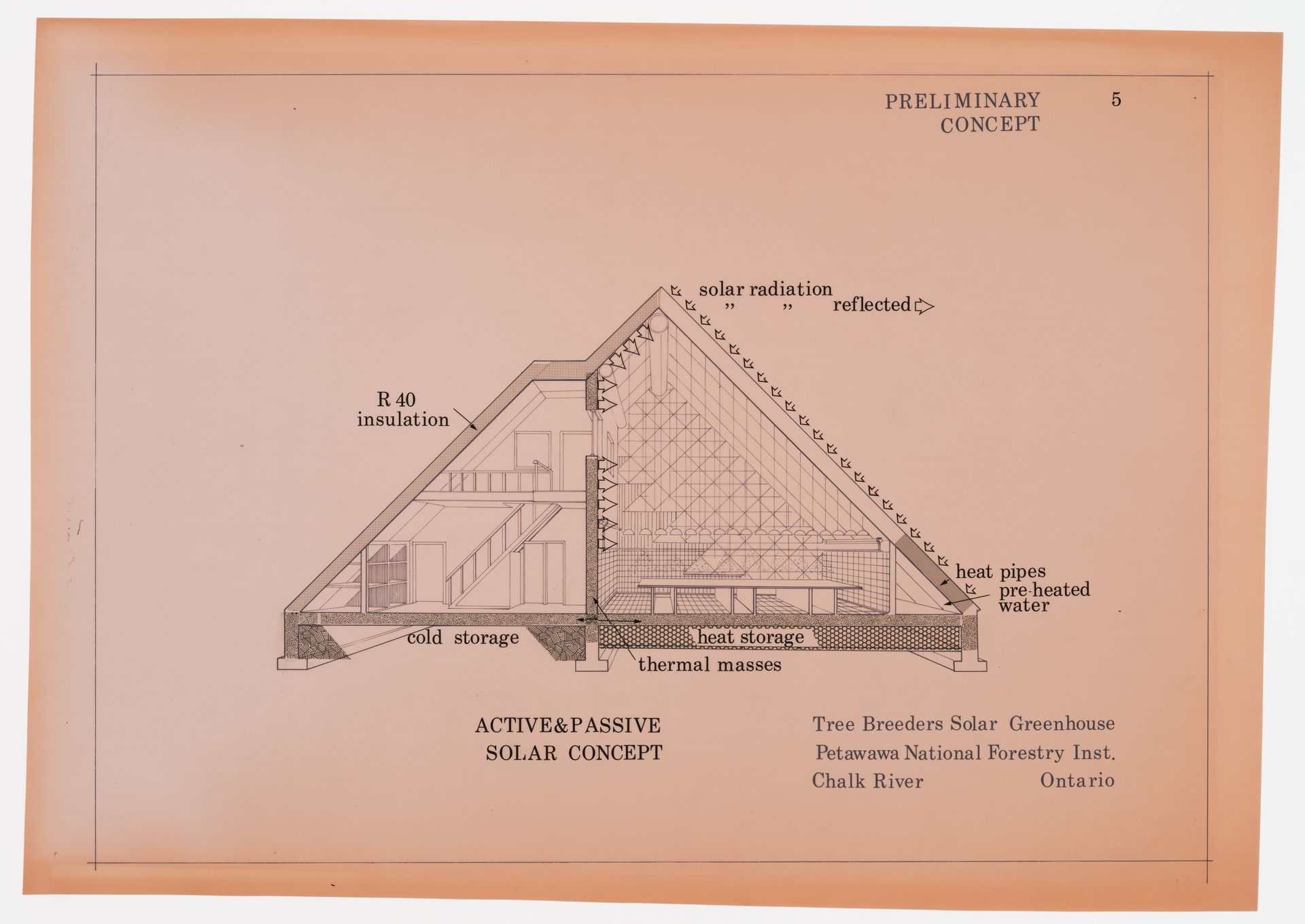
The passive use of energy in architecture builds upon principles in nature that Mumford already championed in 1924 in Sticks and Stones. While we can “design with nature,” as landscape architect Ian McHarg put it, Mumford pointed out that we tend to use technological solutions, such as artificial lighting and air conditioning, to detach the building from its environment—at the cost of a higher energy use.
In his last books, Mumford argued that humans had created a “Megamachine”—a system so vast that we cannot see that we are ourselves parts of its mechanism.5 We create urban environments through which humans can function in a global economy but in which they cannot flourish locally. As pollution, species extinction, and climate change pervade all scales at increasing rates, and as we ourselves shrink in the shadow of the technological sublime, Mumford’s predictions are unfortunately gaining relevance. Perhaps, then, the answer to the human predicament lies in architecture. This holds true at least to some extent: we are literally building our future, and it matters whether we construct more Burj Khalifas or more ecologically adapted settlements for the good of actual human beings. At any rate, it is hard to deny that, as our problems reach planetary dimensions, the supposedly human epoch is neither human nor humane in its scale.
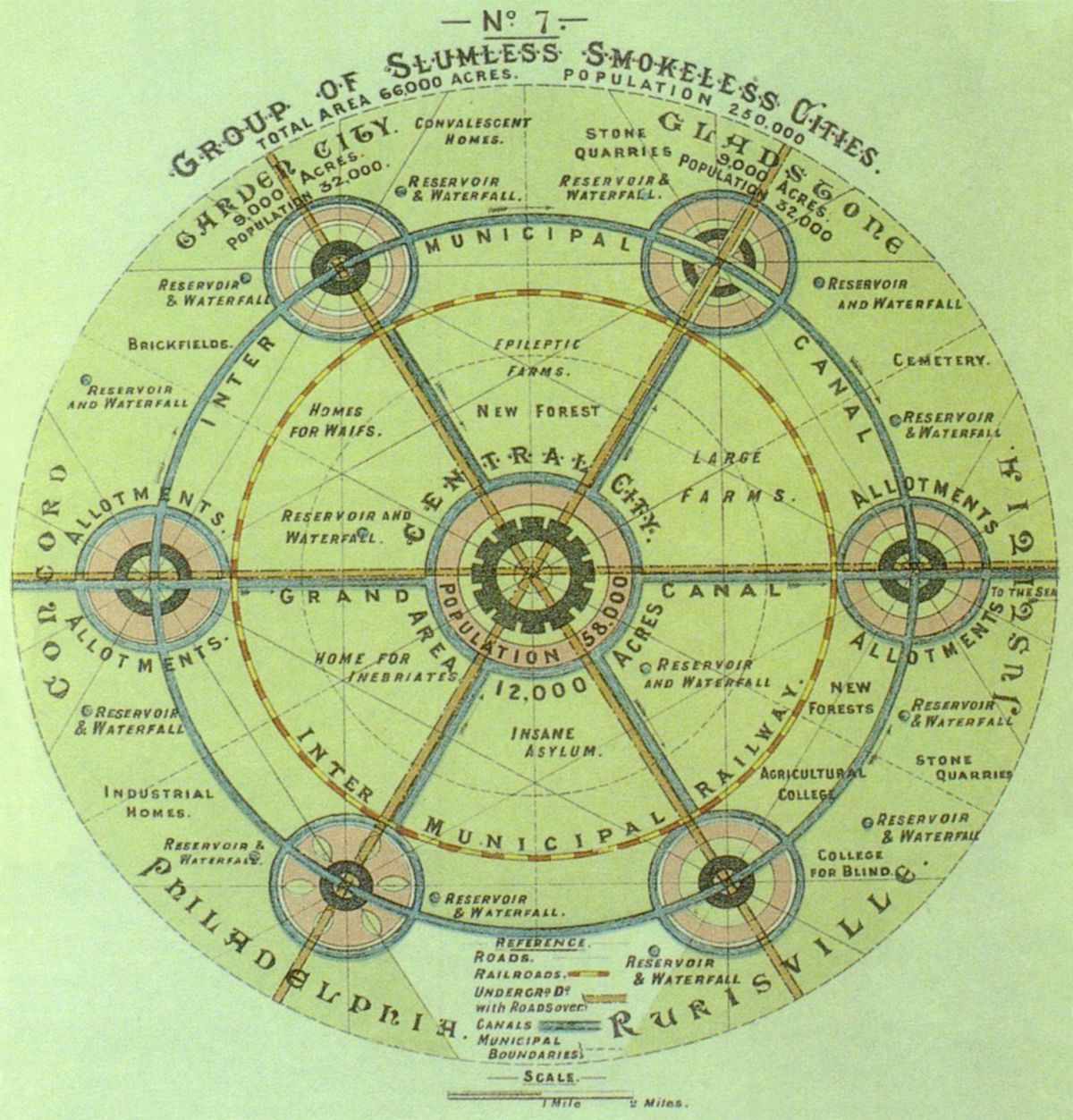
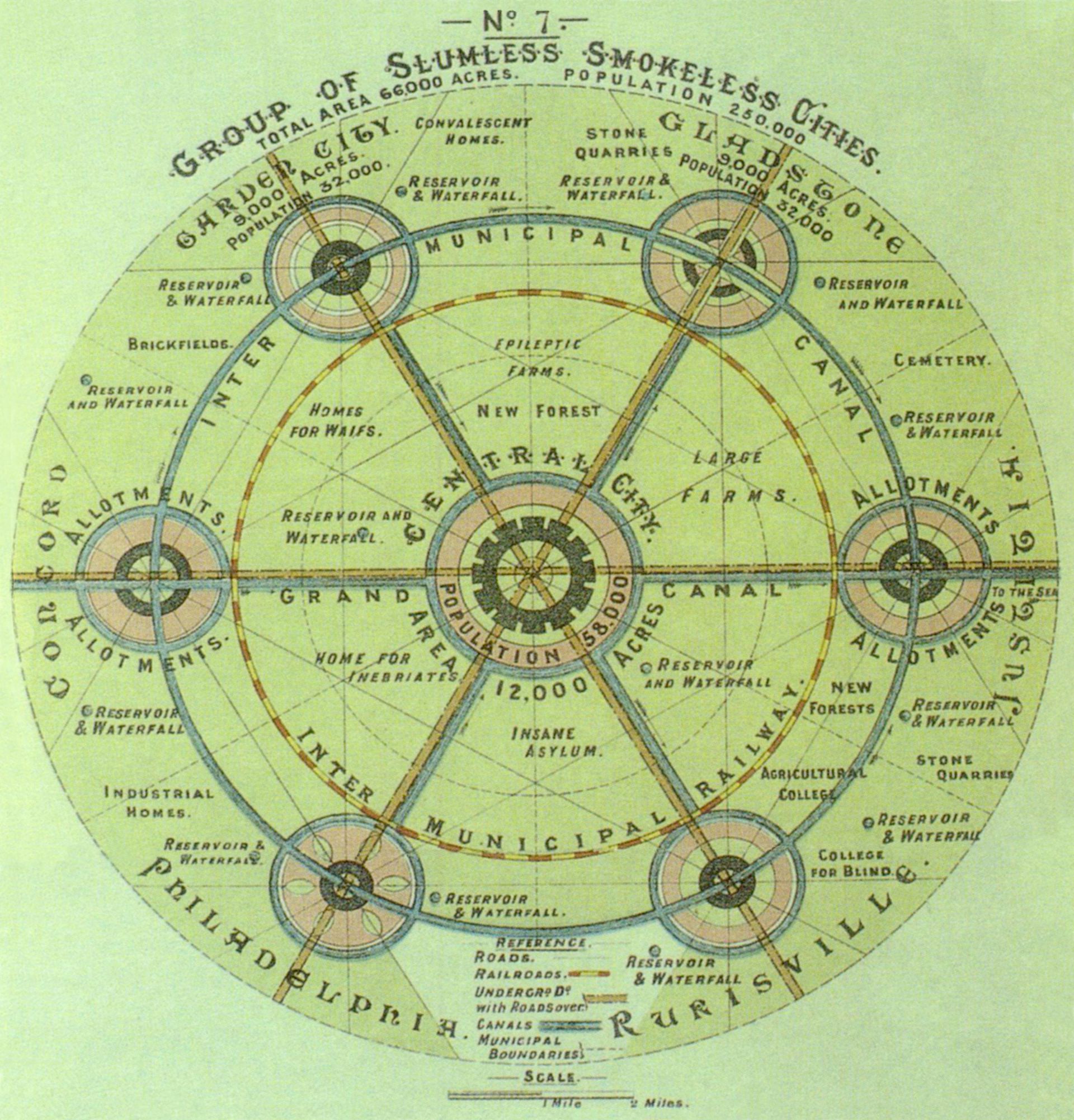
Howard’s system of “slumless smokeless cities” is conceived of as a regional system, an environment designed to benefit the hundreds of thousands of people who live within it—in this case the 250,000 inhabitants of the Philadelphia region. In a similar vein, Mumford promoted the idea of the more advanced “regional city” in which countryside and city were balanced with human welfare in mind.
Notes
1 Paul Crutzen, “The Geology of Mankind,” Nature 415, no. 6867 (January 2002): 23. Since being coined in 2000, the term has gone on to live its own life both within and beyond the scientific discourse.
2 Lewis Mumford, Sticks and Stones: A Study of American Architecture and Civilization (New York: Boni and Liveright, 1924), 172–177. In the first book of the Nicomachean Ethics, Aristotle argues that the chief end of all “arts” is eudaimonia, or the good life.
3 Lewis Mumford, “The Social Background of Frank Lloyd Wright,” in Frank Lloyd Wright: The Complete 1925 “Wendingen” Series, Frank Lloyd Wright et al. (New York: Dover Publications, Inc., 1992), 65–79.
4 See the exposition of regional planning in Lewis Mumford, The Culture of Cities (New York: Harcourt, Brace and Company, 1938): 300–392. Mumford argues that “every living creature is part of the general web of life: only as life exists in all its processes and realities . . . can any particular unit of it continue to exist.” Mumford, 302.
5 Lewis Mumford, The Myth of the Machine, vol. 1, Technics and Human Development (New York: Harcourt, Brace, Jovanovich, 1967); Lewis Mumford, The Myth of the Machine, vol. 2, The Pentagon of Power (New York: Harcourt, Brace, Jovanovich, 1970).
 Dr. des. Jonatan Palmblad



Leave a comment